Before a Payday Loan: Check the Lower-Cost Alternatives
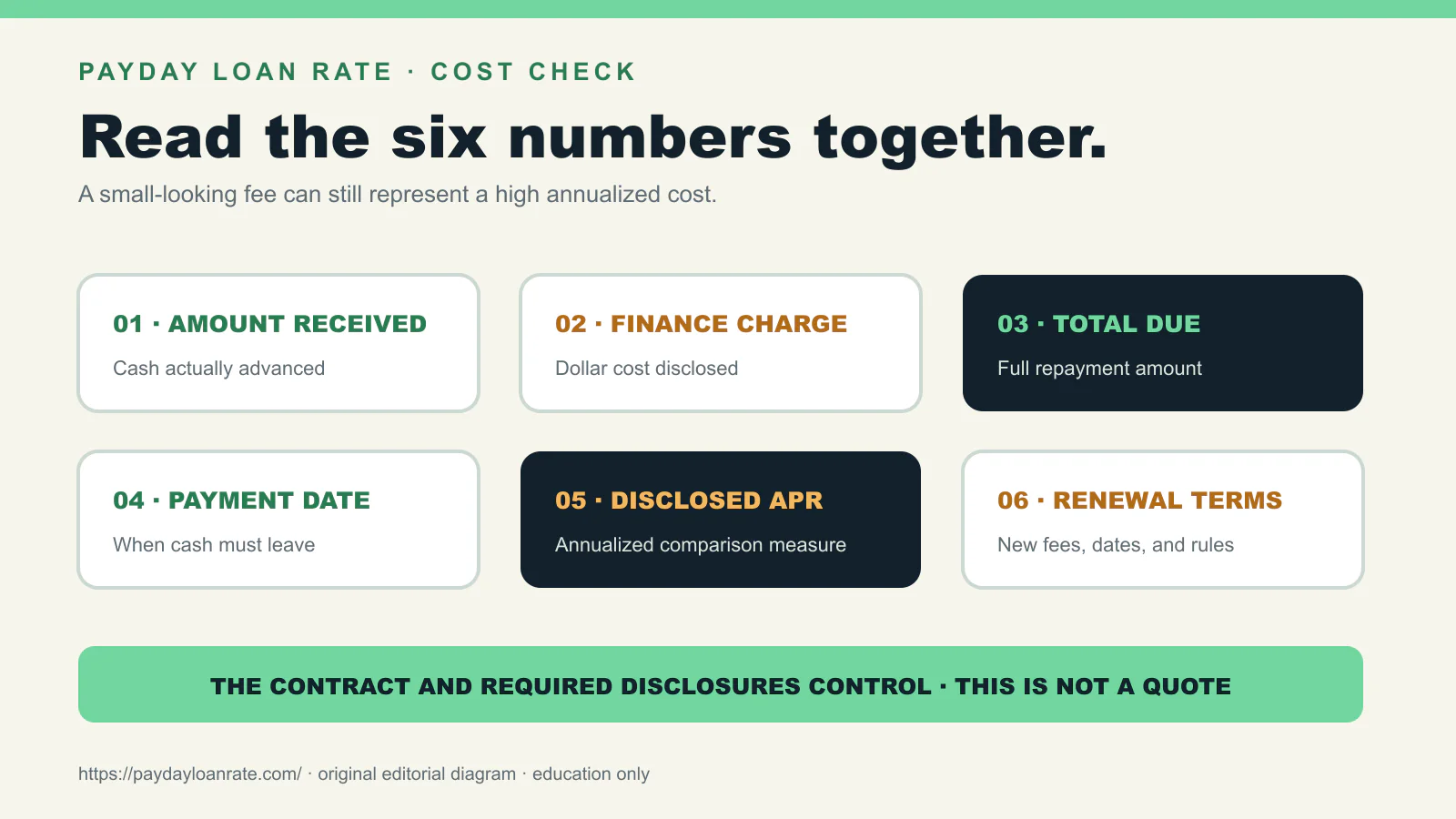
Image: Payday Loan Rate
The Consumer Financial Protection Bureau describes payday loans as short-term, high-cost credit. A borrower facing a bill may still need a solution today, but the fastest offer is not automatically the cheapest one.
Ask six questions
What is the total amount repaid? What date is the full balance due? What happens if the payment fails? Can the lender roll, refinance, or repeatedly debit the account? What fees are charged beyond the headline finance charge? What lower-cost option can solve the same bill?
Contact the biller first and ask about a due-date change, payment plan, hardship program, or fee waiver. Check a local credit union for small-dollar alternatives. Consider employer assistance or a trusted support network only if the repayment terms are clear and voluntary.
Avoid the rollover calendar
If the repayment date depends on your next paycheck but the paycheck is already committed, the loan may simply move the shortfall forward. Write the next two pay cycles and essential bills on paper before borrowing. If the numbers do not close, ask for help from a nonprofit credit counsellor or local consumer-protection office.
This article is educational, not financial or legal advice. Rules and products vary by jurisdiction.
Primary source
payday loansshort-term borrowingAPRconsumer financedebt